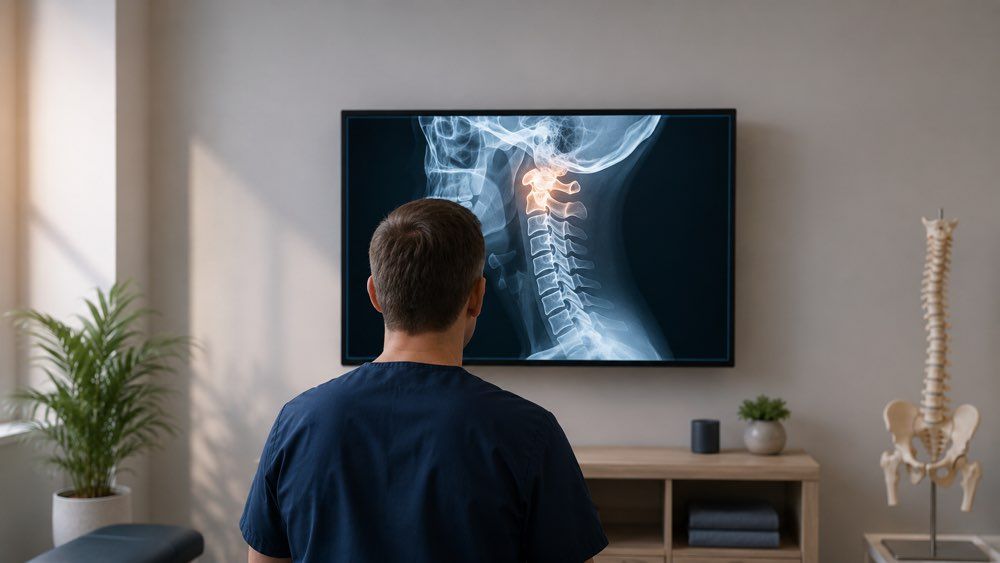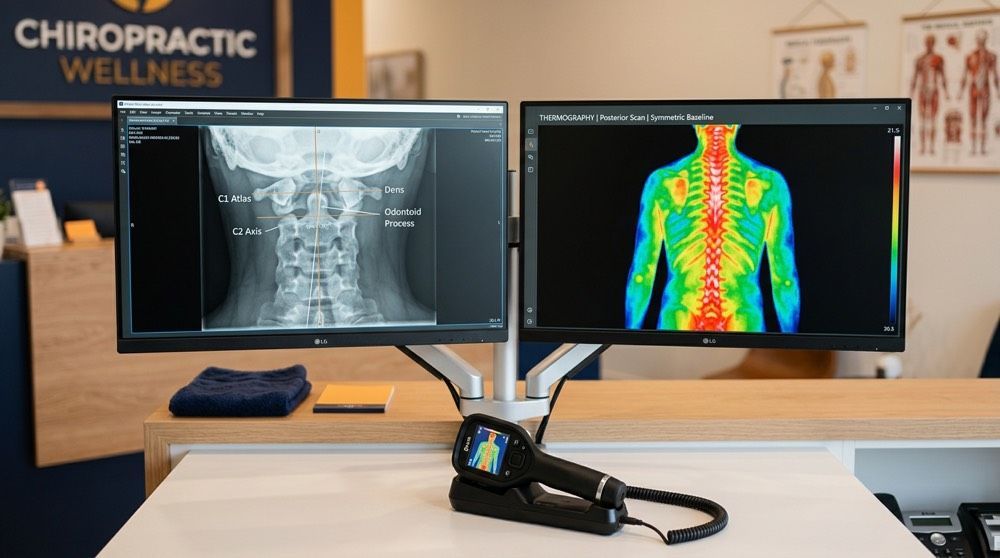
Guesswork has no place in precision chiropractic. The reason a digital infrared scan and digital X-rays are central to upper cervical chiropractic technology is simple: you cannot correct what you have not accurately measured. At Keystone Specific Chiropractic Center in Wyomissing, every correction begins with objective data — not a hunch, not a hands-on guess, and not your symptoms alone. Two diagnostic technologies work together to make that possible: digital postural X-rays and digital infrared (Tytron) thermographic scanning. Together they answer two different questions, and you need both answers to deliver care that is truly specific.
Why Measurement Comes First
Upper cervical care focuses on the atlas (C1) and axis (C2), the two vertebrae at the top of the spine that sit closest to the brainstem. A misalignment here can be a fraction of a millimeter and still create nervous system interference that ripples through the body. At that scale, "feeling around" simply isn't precise enough. If you want the full background on why this region carries so much influence, start with our overview of upper cervical chiropractic care.
This commitment to measuring first is the heart of our philosophy. We believe chiropractic should be
scientific and about the alignment, which means establishing a clear, objective baseline before anyone is adjusted — and measuring again afterward to confirm the result.
Digital X-Rays: Mapping the Exact Problem
Digital postural X-rays show the precise position and angle of the atlas. This is the geometry that determines everything that follows. The exact direction of an upper cervical correction — its vector, depth, and contact point — is calculated from these images. Without them, a "correction" is really just a guess about which way the bone needs to move.
Because the imaging is digital, it's fast, low-dose, and easy to review with you directly. You don't have to take our word for what's happening at the top of your spine; you can see it. That transparency is part of what makes
specific upper cervical care different from a one-size-fits-all approach.
Infrared Scanning: Reading the Nervous System
If the X-ray tells us where the bone is, the infrared scan tells us how the nervous system is responding. Keystone Specific uses a Tytron infrared scanner, which reads the thermal patterns along both sides of the spine. Healthy nervous system function tends to produce balanced, symmetrical heat patterns. Asymmetries — one side reading warmer or cooler than the other — are a reliable, non-invasive marker of nervous system interference.
The scan is completely painless. It takes only a few minutes, involves no radiation, and requires nothing more of you than to sit still while the instrument glides along your neck and back. What it produces is objective data: a picture of nervous system function that doesn't depend on how well you can describe your symptoms.
Why Both Technologies, Not Just One
It's a fair question: if the X-ray shows the misalignment, why scan at all? Because the two tools measure different things, and each covers the other's blind spot.
The X-ray shows structure — the position of the bone. The infrared scan shows function — how the nervous system is actually behaving. A correction that looks perfect on paper still has to prove itself functionally, and that's what the scan verifies. Used together, they let us confirm that interference is present before we adjust, choose a correction based on real geometry, and then check that the interference has actually resolved afterward.
Seeing the Correction Work
This before-and-after measurement is one of the most reassuring parts of care for new patients. Before the adjustment, the scan establishes that nervous system interference exists. After the adjustment and the rest period, we scan again. When the patterns balance out, you can see — not just feel — that the correction held.
That visible, measurable evidence changes the experience of care. You're not left wondering whether anything happened. You have data, and so do the doctors. It's also why patients who have bounced from treatment to treatment so often describe this as the first time they felt like someone was actually measuring the problem. Their
success stories reflect that again and again.
For readers who want to understand the science behind thermographic measurement, the U.S. Food and Drug Administration provides a neutral overview of how infrared thermography is used in medicine. (See the
FDA.)
Frequently Asked Questions
Is the infrared scan safe? Does it use radiation?
The Tytron infrared scan is completely non-invasive and uses no radiation. It simply reads the heat patterns your body already produces. It's painless and typically takes just a few minutes.
Why do I need X-rays for upper cervical chiropractic?
Digital X-rays reveal the exact position and angle of the atlas, which determines the precise direction of your correction. Without that geometry, an adjustment would be based on assumption rather than your individual anatomy.
How do you know the adjustment actually worked?
We scan again after the correction. When the thermal asymmetries that indicated nervous system interference resolve, it provides objective confirmation that the adjustment held — visible evidence rather than guesswork.
Take the Next Step
If you've never had care that actually measured the problem before treating it, that's exactly what to expect at Keystone Specific Chiropractic Center in Wyomissing. We image first, scan first, and recommend care only when the data shows it can help.
About the Author
Dr. Bill Moss, DC, is the founder of Keystone Specific Chiropractic Center in Wyomissing, PA, and a specialist in upper cervical chiropractic. After resolving his own years of anxiety and panic through upper cervical care, he devoted his practice to the same root-cause approach, using digital imaging and infrared scanning to deliver precise, gentle corrections. He is trained in the Knee Chest and Side Posture Toggle techniques and has taught upper cervical chiropractic to practitioners internationally.
Ready to start? Schedule your consultation today:
Contact Keystone Specific.