The knee chest upper cervical technique is one of the most precise — and one of the gentlest — methods in all of chiropractic. If you've only ever pictured chiropractic as a forceful twist of the neck followed by a loud "pop," this approach will look nothing like what you expect. There is no forceful twisting and no high-velocity thrust. Instead, a light, carefully measured contact is made to the very top of your spine, in a direction determined entirely by your X-ray analysis. Some patients do hear or feel a soft pop when the correction is made, and that is completely normal — it simply is not produced by force the way a traditional adjustment is. At Keystone Specific Chiropractic Center in Wyomissing, the knee chest upper cervical technique is one of two methods the doctors at Keystone Specific use to correct the atlas and restore clear communication through the nervous system.
To understand why such a gentle correction can have such a meaningful effect, it helps to start with what this technique is actually doing.
What the Knee Chest Upper Cervical Technique Actually Is
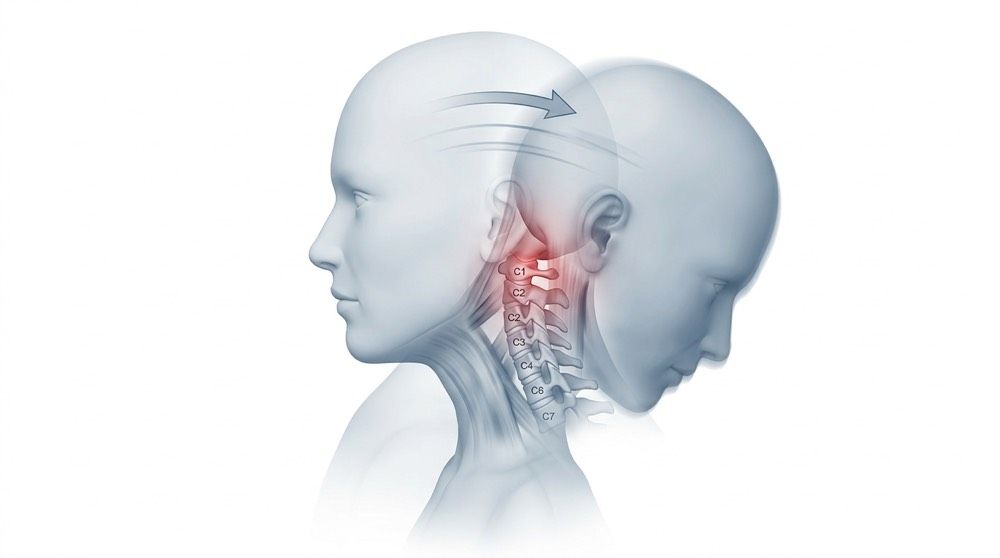
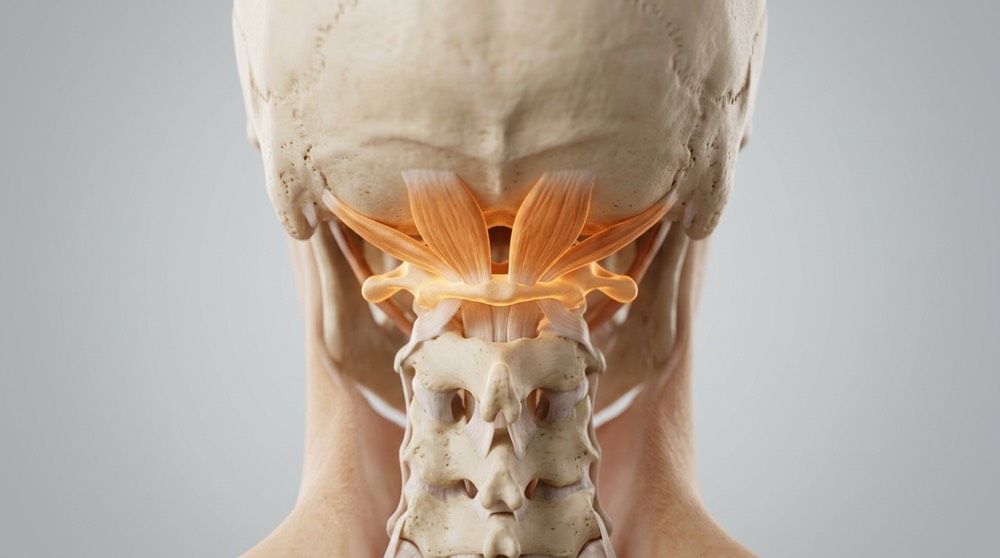
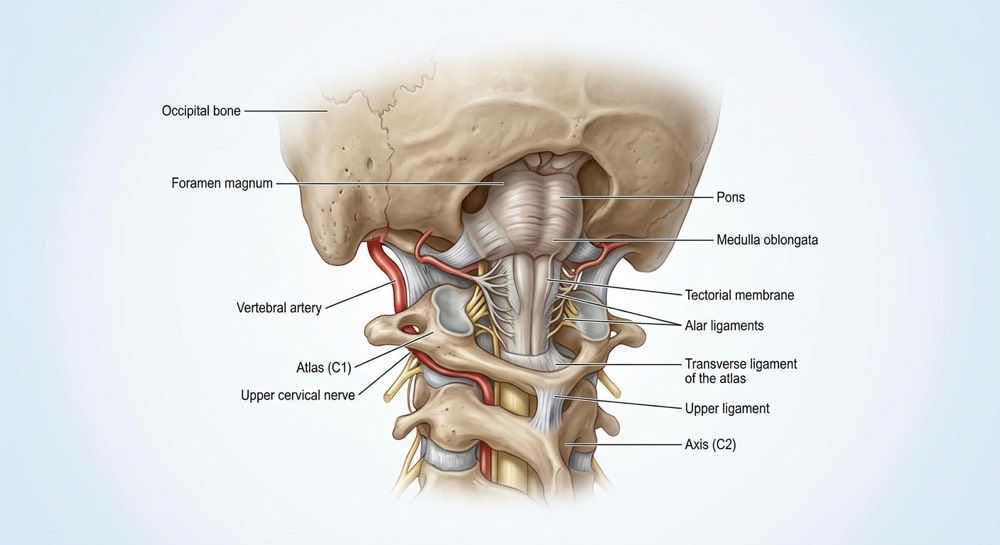
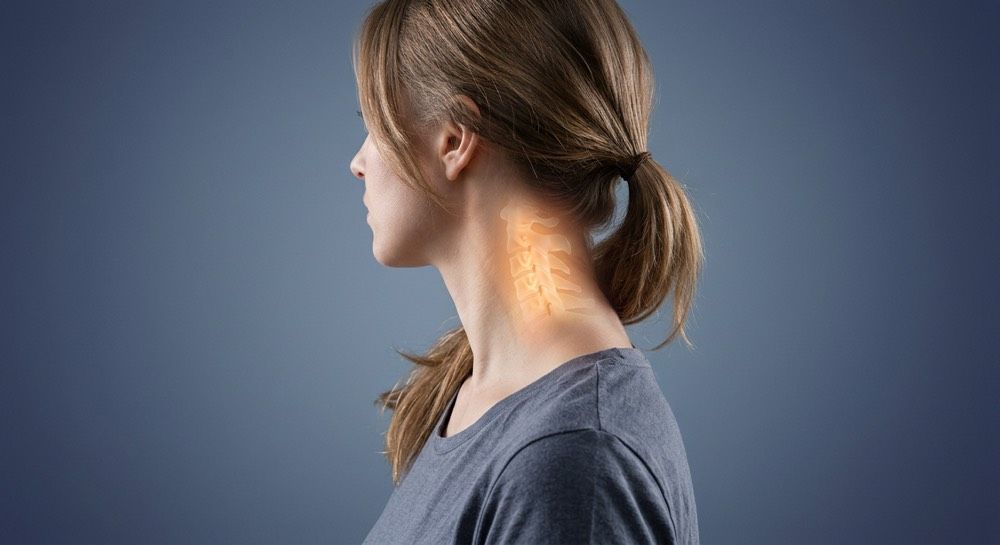
The knee chest technique focuses on the atlas (C1) and axis (C2) — the two small vertebrae at the junction where your skull meets your spine. This is the most mobile and most vulnerable segment of the entire spine, and it sits directly around the brainstem, the control center for so much of what your body does automatically. For a fuller picture of why this region matters, see our overview of upper cervical chiropractic care
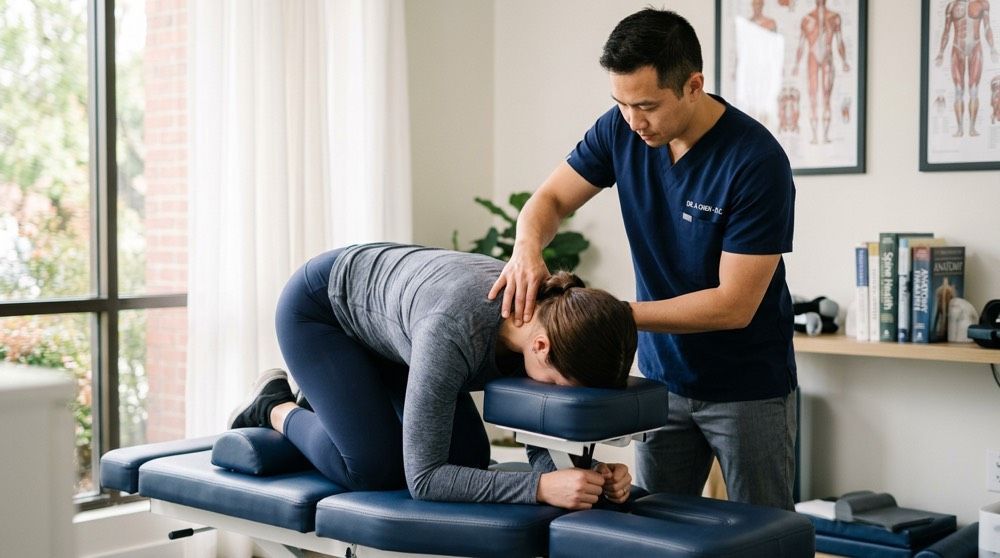
In the knee chest position, the patient kneels on a padded bench and rests forward, which lets the head and neck settle into a relaxed, stable posture. From there, the correction can be delivered along a very specific line of drive. The precision of the result comes from the analysis — the digital imaging that maps exactly how the atlas has shifted — not from force. That is the central idea behind everything we do: this is care that is
scientific and about the alignment, not just the adjustment.
Why Our Doctors Use It
Different bodies hold their corrections differently, and a technique that is ideal for one patient may not be the best fit for another. Our doctors are trained in both the knee chest method and the Side Posture Toggle, which gives them the flexibility to match the technique to the patient rather than forcing every patient into a single protocol.
The knee chest technique is often chosen because it allows for an exceptionally clean, controlled correction with the patient in a stable, supported position. It is gentle enough for a wide range of patients while still delivering the specificity that defines
specific upper cervical care. The choice is never arbitrary — it's based on your imaging, your body type, your comfort, and how well you hold the correction over time.
What Happens on the Table, Step by Step
Knowing what to expect removes most of the anxiety people feel about an adjustment. Here is the sequence for a knee chest correction at Keystone Specific.
First, your imaging is reviewed. Digital X-rays show the exact position and angle of the atlas, and that geometry determines the precise vector — the direction, depth, and contact point — of your correction. Nothing is improvised.
Next, you move into the knee chest position on the padded bench. your doctor makes a light, specific contact at the upper cervical spine and delivers the correction along the predetermined line of drive. The whole thing is quick and quiet. Most patients are genuinely surprised that the adjustment they were nervous about is already finished.
The Correction Itself
The force involved is measured in ounces, not pounds. There is no rotation of the neck and no attempt to "crack" multiple joints. Because the analysis has already done the hard work of locating the problem, the correction can be small and deliberate. This is what makes the technique appropriate for people who are anxious about traditional adjusting, as well as for children, seniors, and patients in acute pain.
Why the Rest Period Matters
After the correction, you rest for 15 to 20 minutes in a quiet recovery area. This step is not optional downtime — it is a clinical part of the protocol. The rest period gives your nervous system time to begin re-patterning, settling into the new signals coming from a corrected spine. Holding still supports that neurological reset and helps the correction "hold" rather than bouncing back.
Many patients describe feeling lighter, clearer, or simply different by the time they get up — sometimes even on the drive home. That early shift is one of the reasons people who have "tried everything" often tell us this experience felt different from the start. To hear what that has looked like for real patients, read some of their
success stories.
The brainstem's role in regulating essential body functions is well established in mainstream neuroscience; the National Institute of Neurological Disorders and Stroke offers a reliable, non-commercial overview for anyone who wants to dig into the underlying science. (See
NINDS.)
Frequently Asked Questions
Does the knee chest adjustment hurt?
No. The knee chest upper cervical technique uses very light, specific force and no forceful twisting. Most patients feel little more than a gentle contact — some do hear a soft pop, which is normal — and many are surprised the correction is over so quickly.
How is this different from a regular chiropractic adjustment?
A traditional adjustment often involves manually moving several segments of the spine, frequently with a quick thrust and an audible release. The knee chest technique corrects one precisely identified misalignment of the atlas, guided by digital imaging, using a fraction of the force.
How do you know if the correction worked?
We measure. A digital infrared scan reads nervous system function before and after the correction, so both you and your doctor can see whether the adjustment held rather than just guessing based on how you feel.
Take the Next Step
If the idea of a gentle, measured correction — instead of a forceful twist — is what's been keeping you from trying chiropractic, the knee chest upper cervical technique may be exactly what you've been looking for. At Keystone Specific Chiropractic Center in Wyomissing, we measure first, explain what we find, and recommend care only when the data shows it can help.
About the Author
Dr. Bill Moss, DC , is the founder of Keystone Specific Chiropractic Center in Wyomissing, PA, and a specialist in upper cervical chiropractic. After resolving his own years of anxiety and panic through upper cervical care, he devoted his practice to the same root-cause approach, using digital imaging and infrared scanning to deliver precise, gentle corrections. He is trained in the Knee Chest and Side Posture Toggle techniques and has taught upper cervical chiropractic to practitioners internationally.
Ready to start? Schedule your consultation today: