As an expert in chiropractic care at Keystone Specific Chiropractic Center, I have seen countless patients suffering from disc-related issues in the spine. In this blog, I want to help develop an understanding of disc-related pain: causes and prevention and misconceptions.
The Vertebral Disc: A Unique and Fascinating Structure
The vertebral disc in the spine is a fascinating and unique structure, serving three primary functions. Firstly, they act as shock absorbers in the spine, positioned between each bony vertebra. Secondly, they act as tough ligaments that hold the vertebrae of the spine together. Lastly, they are cartilaginous joints that allow for slight mobility in the spine.
Symptoms of Disc-Related Issues
Specific problems with any of these discs may prompt unique symptoms, including pain that originates in the disc itself and/or pain that is related to the disc pressing on a nearby nerve structure.
Disc Composition and Dehydration
Spinal discs consist of two layers: a tough outer layer called the annulus fibrosus and a squishy inner layer called the nucleus pulposus. The outer layer is made of thick collagen fibers, bonding the disc to the top and bottom of the bone it resides between to prevent the disc from slipping. The inner layer is made of a jelly-like material important for shock absorption for our spine.
As we age, our discs and joints lose a certain amount of hydration or become dehydrated, causing the discs to become stiff. Once the disc becomes stiff, it cannot cushion the vertebrae properly, leading to a lack of range of motion, joint stiffness, or pain.
Herniation and Pressure on the Nerves
The annulus fibrosus loses its hydration first and cracks, causing the gelatinous inner layer to bulge through the crack. The most likely place for the annulus fibrosus to crack is in the posterior area, closest to the spinal cord. When the inner layer, the nucleus pulposus, bulges (herniates) posteriorly, it places pressure on the spinal cord and the surrounding nerve roots.
Symptoms of Disc Herniation
Disc herniation can occur at any level of the spine but is most common in the neck and low back because those areas bear more postural weight. Once the disc places pressure on the nerves, it can cause sharp, shooting pain up or down the spine, as well as numbness, burning, or tingling sensations.
Prevention and Treatment
To prevent disc herniation, we recommend improving posture through chiropractic care, which removes the pressure placed on the spinal cord and nerve roots, core strengthening exercises to help withstand forces placed on our spinal column, staying hydrated, learning and using proper lifting biomechanics, and sleeping on a firm and supportive mattress.
Proper spinal alignment is essential for disc health because it allows the forces from gravity that are exerted on our spine to be evenly distributed throughout our body. Spinal alignment also helps to remove the pressure from the nerves.
Our Chiropractic Approach to Disc-Related Pain
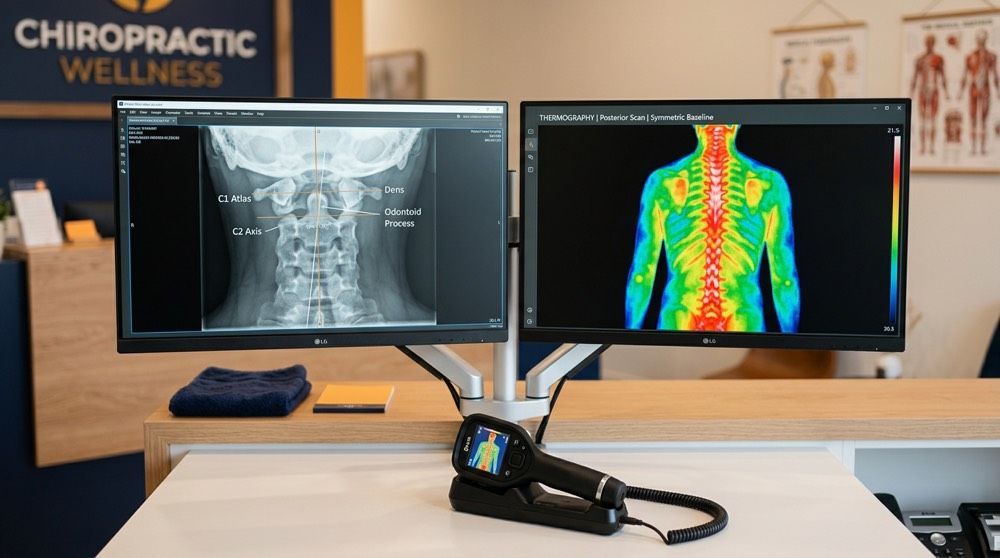
At Keystone Specific Chiropractic Center, we use a technology called digital infrared technology to monitor where there is pressure along the nervous system. We also use state-of-the-art X-rays to see where there are postural and structural misalignments in the spine. We make sure to give at-home exercises to help with spinal hygiene as well.
If you are experiencing pain or discomfort in your spine and suspect a disc-related issue, do not hesitate to schedule a consultation with us. Our chiropractic care can help alleviate pain and improve disc health.